Louvers have moved from purely functional building elements — ventilation grilles, external sun shades — into one of the more interesting design categories in contemporary Kolkata interiors. A louver wall adds something that flat panels, wallpaper and paint cannot: depth, shadow, rhythm, and the quality of a designed architectural surface.
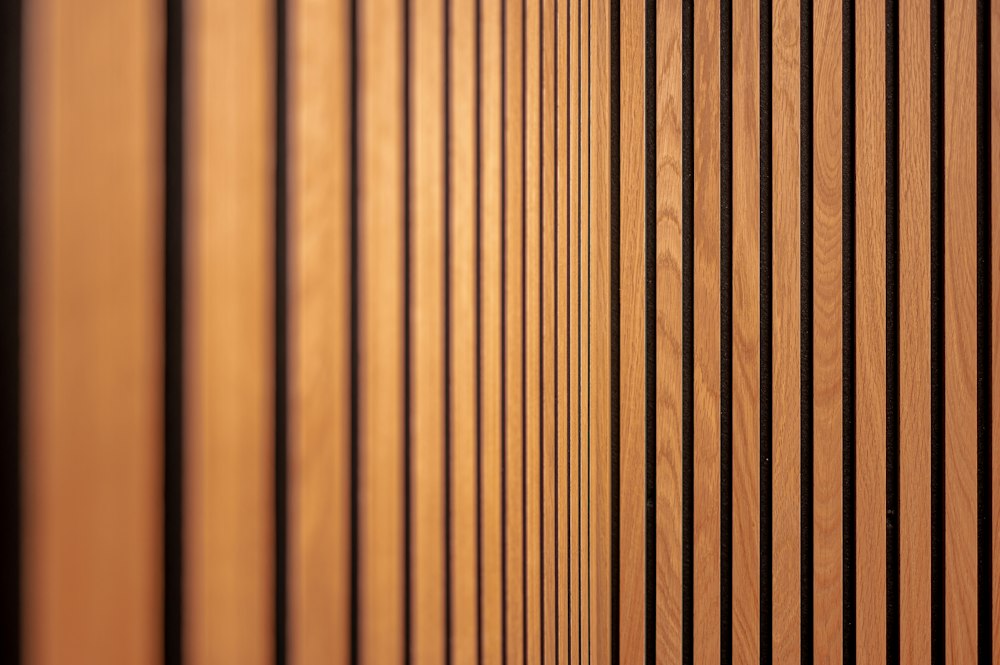
The right louver installation reads differently at different times of day. Morning light raking across a vertical wood louver wall creates sharp shadow lines that shift as the sun moves. The same wall at noon is flat. By afternoon, it has changed again. This responsiveness to light is what makes louvers a real design choice and not just another covering material.
Kolkata's newer residential developments and commercial fit-outs have caught on to this. Louver feature walls in lobbies, living rooms and balcony screens are increasingly common. This guide covers what you need to choose and specify louvers for any application.
What are louvers?
Louvers (also spelled louvres) are a series of parallel slats or blades, angled or horizontal, spaced at regular intervals. They originated as ventilation elements, controlling airflow while blocking direct view or weather. In contemporary interiors and exteriors, they are used primarily as architectural screens, decorative panels and feature wall elements.
The design variables that matter: slat material, slat width, slat profile, spacing between slats, and angle (fixed or adjustable). These determine how much light passes through, how much privacy the screen provides, and the visual texture of the installation.
Types of louvers
Wood louvers (interior)
Natural wood louvers in teak, oak, pine, bamboo and engineered wood (MDF) are the warmest and most popular choice for interior feature walls. They work in living rooms, bedrooms, home offices and commercial reception areas.
Natural wood has organic variation — no two panels look identical — and ages well. MDF louvers with wood veneer or lacquer deliver a more uniform look at lower cost. Neither is wrong; the choice depends on whether you want character or consistency.
Best for: living room feature walls, bedroom accent walls, study room panelling, partition screens.
Kolkata note: solid wood louvers in controlled interior conditions — good ventilation or AC — perform well. For rooms with significant humidity fluctuation (rooms that go from dry AC to open windows in monsoon), engineered wood or MDF louvers are more dimensionally stable than solid timber.
Wood louvers (stained and painted finishes)
The same wood louver panels in stained finishes — walnut, ebony, teak, wenge — or solid paint finishes (white, black, grey, custom colour). Painted white louvers on a living room wall create a clean, architectural aesthetic. Dark-stained panels read as rich and warm. Both are popular at the moment in Kolkata interiors.
Aluminium louvers (exterior)
Powder-coated aluminium louvers for balcony screens, pergolas, exterior sun shades and commercial facades. Aluminium is the right material for outdoor Kolkata applications. It does not rust, does not absorb moisture, does not crack in heat, and holds its powder-coat finish for 10–15 years.
Best for: balcony privacy screens, terrace pergolas, exterior building facades, commercial sunshades.
Kolkata note: Kolkata's monsoon season tests every exterior material. Untreated wood, steel and cheaper finishes fail within a few monsoon seasons. Powder-coated aluminium handles humidity, salt air and UV without structural degradation. On balconies and terraces, there is really no substitute.
Aluminium louvers (interior)
Aluminium louvers used indoors for an industrial or contemporary aesthetic. Popular in commercial spaces — offices, restaurants, retail fit-outs — and in residential spaces going for a minimal, architectural look. Lighter weight than wood, more uniform in appearance.
PVC and WPC louvers
Wood-plastic composite (WPC) and PVC louvers combine the appearance of wood with the weather resistance of plastics. WPC is a practical choice for semi-outdoor areas: covered balconies, pergola soffits, interior walls in rooms with high humidity. Not as premium-looking as solid wood, but significantly more durable in moisture-prone locations.
Louver applications
| Application | Recommended material | Key requirement |
|---|
| Interior feature wall | Teak / engineered wood | Dimensional stability, finish quality |
| Bedroom accent wall | Wood or painted MDF | Warm aesthetics, sound absorption |
| Room partition / divider | Wood louvers or aluminium | Privacy level vs. openness balance |
| Balcony privacy screen | Powder-coated aluminium or WPC | Weather resistance, structural |
| Terrace pergola slatting | Aluminium or WPC | UV resistance, load capacity |
| Exterior sun shade (brise-soleil) | Aluminium | Structural, weather, UV |
| Commercial reception wall | Aluminium or stained wood | Durability, maintenance |
Kolkata-specific louver advice
Interior vs. exterior material choice. The distinction matters more in Kolkata than in drier climates. Wood louvers in a well-ventilated interior — fine. The same wood louvers on an exposed north-facing balcony that gets direct monsoon rain — they will warp, crack and potentially delaminate within two to three seasons. Always specify the exact location and exposure when ordering. We ask about this on every project.
Balcony screens in Kolkata high-rises. Louver screens on high-rise balconies face significant wind load, particularly during pre-monsoon storms. Aluminium screens at height need proper structural fixings. This is not a DIY installation. Our team assesses fixings and load requirements during the site visit.
Sound absorption. A louver feature wall in a bedroom or living room adds a degree of sound absorption that flat hard-surface walls cannot provide. In Kolkata's dense apartment buildings, noise from adjacent flats is a constant issue. A wood louver wall with an acoustic backing panel behind it provides meaningful sound reduction, not just visual interest.
Slat spacing and privacy. The gap between slats determines how much you can see through a screen. Close spacing (25–30mm between slats) provides good privacy at an angle. Wider spacing (50–70mm) allows more airflow and light at the cost of privacy. For balcony screens, most Kolkata residents prefer closer spacing — the buildings are close together and overlooking is a real concern.
Customisation is the norm. There is no standard louver product that fits every space. Slat width, spacing, profile (flat, angled, rounded edge), length, material and finish all need to be specified for each project. JJ Sales India makes all louver panels to custom specification.
Price guide — louvers in Kolkata (2026)
| Type | Per square foot | Feature wall (12×9 ft) |
|---|
| MDF / engineered wood (interior) | ₹80 – ₹200 | ₹9,000 – ₹22,000 |
| Teak wood (solid, interior) | ₹200 – ₹450 | ₹22,000 – ₹50,000 |
| Powder-coated aluminium (interior) | ₹120 – ₹280 | ₹14,000 – ₹32,000 |
| Powder-coated aluminium (exterior) | ₹150 – ₹350 | ₹17,000 – ₹40,000 |
| WPC (semi-outdoor) | ₹100 – ₹250 | ₹12,000 – ₹28,000 |
| Installation (labour) | ₹25 – ₹60 per sq ft | ₹3,000 – ₹7,000 |
Prices vary by slat width, spacing, profile and finish. Contact us for a project-specific quote.
Why buy louvers from JJ Sales India?
JJ Sales India supplies wood and aluminium louver panels in Kolkata for interior feature walls, room partitions, balcony screens, pergolas and exterior facades.
Full customisation. All panels are available in custom slat spacings, lengths and profiles. We do not sell stock-size panels that may or may not fit your project — we specify and supply to your exact requirements.
Wood and aluminium under one roof. Both material categories, with advice on which is correct for your specific application and exposure conditions.
Natural, stained and painted finishes. Whatever the interior direction — warm natural wood, dark-stained walnut tones, clean white painted panels, industrial aluminium — we have the right finish.
Expert specification. Choosing louvers involves decisions about structural fixing, load capacity for exterior applications, slat profile, and finish durability. Our team has the technical knowledge to specify correctly, not just to sell panels.
Interior and exterior projects. We handle both residential interior feature walls and exterior architectural screens. The installation requirements are different, and we are experienced in both.
Frequently asked questions
What is the difference between wood and aluminium louvers?
Wood louvers give warmth, organic texture and a natural aesthetic, making them best for interiors. Aluminium louvers are weather-resistant, dimensionally stable in humidity and heat, and structurally stronger, making them best for exterior applications like balcony screens, pergolas and sun shades. WPC bridges the gap for semi-outdoor locations.
Can louvers be used as a room divider?
Yes. Louver partitions are an effective way to define zones in open-plan living spaces while maintaining airflow and partial visual connection between areas. The slat spacing determines how much privacy vs. openness the partition provides.
Are wood louvers suitable for a Kolkata balcony?
Solid wood on an exposed Kolkata balcony is not recommended. The combination of direct monsoon rain, UV and humidity fluctuation causes warping and cracking within a few seasons. Use WPC or powder-coated aluminium for any outdoor application.
What slat spacing should I choose for a privacy screen?
25–35mm gap between slats provides good privacy at normal viewing angles. 40–60mm gives more light and airflow but less privacy. For most Kolkata balcony applications where privacy from adjacent buildings is the goal, 25–30mm spacing is the standard recommendation.
How are louver panels fixed to the wall?
Interior panels are typically fixed using a concealed clip system to a framework of battens, or direct-fixed to a structural backing. Exterior panels require structural fixings rated for wind load, which is particularly important for high-rise balcony applications in Kolkata. Our installation team specifies the correct fixing method for each project.
Do you handle both design and installation?
Yes. We advise on specification, supply the panels, and install. You deal with one team for the entire project.
Visit JJ Sales India — Kolkata's louver panel specialists
Address: 32B Lenin Sarani, Beside Jyoti Cinema, Kolkata 700013
Phone: +91 7003503270
Hours: Monday to Saturday, 10:00 AM – 8:00 PM
Come in with your project details — room dimensions, photos, and any reference images you have in mind. We will help you specify and supply the right louver panel system for your space.
JJ Sales India — Trusted by Kolkata families since 2000.